Spanish Learning Roadmap: From First Word to Fluency

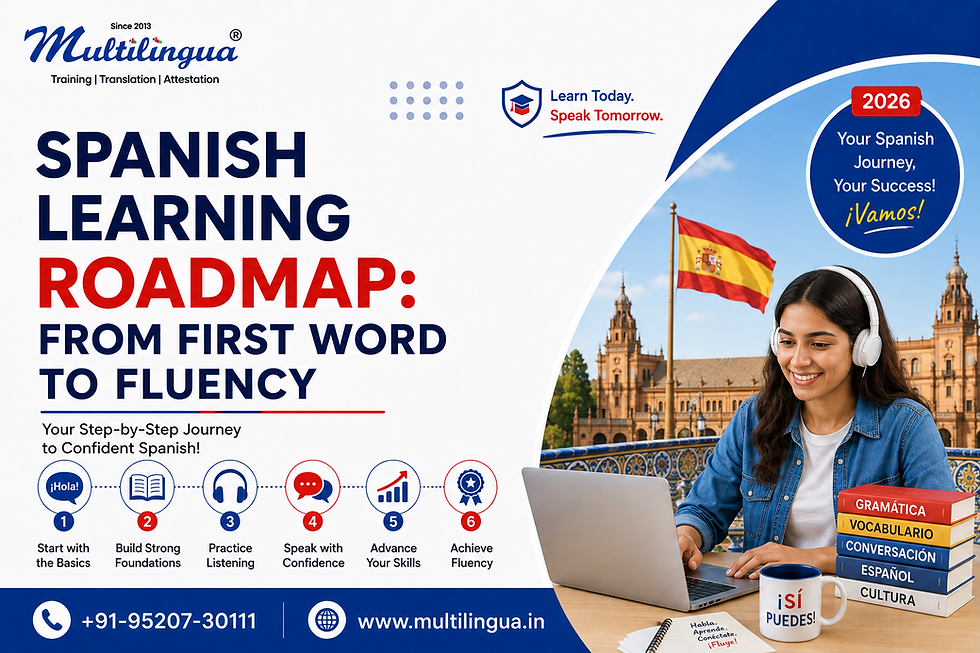
Spanish is often picked because it looks easy on paper, familiar sounds, simple pronunciation rules, and hundreds of millions of speakers worldwide. But going from a few memorized phrases to actual conversational ability takes a plan, not just enthusiasm. Here's how to structure that journey depending on how much time and support you have.
If You Want to Move Quickly
Speed is usually the first thing new learners ask about, and the honest answer is that it depends on daily consistency more than talent. This guide on how to learn Spanish fast covers the specific study habits, like active recall and daily speaking drills, that separate learners who actually progress from those who stay stuck at the beginner stage for months.
If You're Learning on Your Own
Not everyone has the time or budget for structured classes right away, and that's fine as long as self-study is approached with some discipline. This guide on how to learn Spanish at home lays out a realistic weekly routine using apps, shows, and conversation exchange partners, without requiring you to leave your house.
If You Prefer a Clear, Step-by-Step Plan
Some learners do better with a checklist than with general advice, and that's a completely valid learning style. The best way to learn Spanish in 10 easy steps breaks the entire process into a sequence you can simply follow in order, from your first fifty words to your first real conversation.
If You're Still Comparing Methods
If you haven't decided between classroom coaching, apps, or immersion yet, it's worth seeing all three laid out side by side before committing. This overview of what is the best way to learn Spanish compares the pros and cons of each approach so you can pick the one that actually fits your schedule and learning style, rather than the one that's simply most popular.
A Realistic Timeline
Most learners who study consistently, around 30 to 45 minutes a day, can expect roughly the following:
1 to 2 months — basic phrases, greetings, simple present tense
3 to 6 months — everyday conversations, past and future tense
6 to 12 months — comfortable conversational fluency for travel or casual work use
These timelines shift depending on whether you're studying alone or with structured classroom practice, since real-time correction tends to speed up pronunciation and grammar accuracy noticeably.
If Spanish Isn't Quite the Right Fit
Spanish isn't the right language for everyone, and it's worth knowing your options before committing years to it. If your goals lean more toward diplomacy, aviation, or international business roles, it's worth exploring French language classes as an alternative before making a final decision.
Final Thoughts
Spanish rewards consistency far more than intensity, a little bit of daily practice will get you further than occasional long study sessions. Whether you go the fast-track route, the self-study route, or the step-by-step route, the method matters less than sticking with it long enough to reach real conversational ability.


Comentarios